
early
1/1/2026
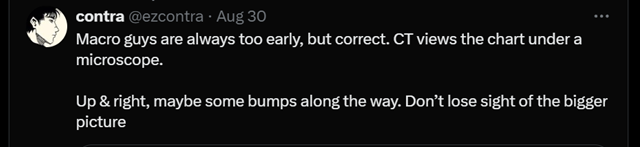
The cost of being early is paid in that gap. It is not an intellectual cost. It is a behavioural one, and it has a duration. A drawdown you can endure for three months will break you at fourteen. A thesis you can hold with a five per cent loss you will abandon at thirty. The question is never simply whether you are right. It is whether you can remain in the position for the full length of time that being right requires, under the full weight of looking wrong the entire way.
Which means the relevant margin of safety is not only the one in the price. The classic margin of safety asks how wrong you can be about value and still not lose money. There is a second margin that matters just as much and is almost never measured: how long you can be early, and how far the position can move against you, before your own behaviour forces the exit that your analysis never would.
A thesis you cannot hold through being early is not a thesis you own. It is a thesis you are renting, on terms the market sets, and the market will call the loan at the worst possible moment.
good new thing hunter
good new thing hunting is about finding a new token with a strong fundamental thesis, positioning early, and riding the subsequent appreciation. unlike a trench warrior, whos holding period is in days if not hours, a fundamental narrative can take weeks to months to develop, although ideally the market agrees. this is my preferred style, and the one i believe is most repeatable without “getting lucky”. the ideal range for a “good new thing” is buying around 50-100mm market cap and exiting around 1bn mark, which means this strategy can scale into the higher levels without issue.
why new thing? because the core thesis is “the market isn’t pricing this properly, it should be worth more”. this is easier with new things than old things for two reasons:
-
time - the market has had less time to price it properly
-
flows - there are less existing holders to sell and more sidelined buyers
it doesn’t entirely have to be a new token - an old token pivoting can work too, with a little more headwind due to existing supply.
how do you find a good new thing? the answer is “you’ll know it when you see it”, but assuming you don’t know what you’re looking for, this is my starting checklist:
- is it new/novel?
this is the most important one. first movers can gain more momentum than you expect, with a very high upside reflexive risk/return. a new meta brings new opportunities to talk about this industry, and all attention calls back to the original.
- does it have a flywheel?
shitcoins have a natural flywheel - as they go up, holders get richer and more excited, tell a few more friends, and thus the cycle goes. other flywheels are more intricate. a bonding curve is generally a fantastic flywheel in of itself, because you can be deterministically early with a guaranteed payout, which bootstraps the activity.
- is there onboarding friction?
onboarding friction allows for your entry, for the thesis to develop. if there’s no onboarding friction, then why are you so lucky to be buying it cheap? maybe it is fairly priced. this also assumes there is a path for that onboarding friction to be reduced - think rollbit migrating from solana to ethereum, hyperliquid spot ecosystem growing, even the bitcoin etf. the friction reducing allows for more flows to enter, to the benefit of those who put in the effort earlier.
while a gem hunter relies on the crutches of “fundamentals”, a meme priest is untethered from such nonsense. meme priest’s are this cycle’s nft traders, intuiting vibes to find alpha. just like nfts, buying and coma-ing is the best trade until its not.
this path requires extreme conviction - one must be able to withstand drawdowns that also deteriorate said vibes. the best priests change the odds of success themselves.
← Back Home